My first taste of rømmegrøt was not at Christmas, and it’s a second-hand memory. It was late June, 1985. I was almost exactly 6 months old and attending the Fargo-Moorhead Scandinavian Festival at the old Trollwood Park in Moorhead, MN. Grandma Ruby was visiting to help with her first grandchild, and while my mom’s back was turned, she fed me my first taste of rømmegrøt. Family lore says Mom was horrified – she was worried rømmegrøt wasn’t safe for babies! Grandma was not fussed, and I reportedly loved it.
Rømmegrøt is an easy food to love – smooth and rich, drenched in melted butter, and liberally dusted with cinnamon and sugar. It’s stick-to-your-ribs kind of food, made of heavy cream and white flour, cooked until the cream turns to butter and the grot – or porridge – is thick and smooth. Rømmegrøt actually means “sour cream porridge,” and in Norway it is made with cultured soured cream and most often served at Christmastime. In the old days a serving was always set out on Christmas Eve as a treat for the nisse, the barn-dwelling gnome who kept the farm safe and running smoothly. While it’s unclear if any nisse made the long journey across the Atlantic and half a continent to settle on the windswept prairie, thousands of Norwegians did, seeking land and a new life and with them came their food and their traditions.
Trading the Old World for the New
My Mom’s relatives settled in Kidder County, ND, prairie pothole country, where hundreds of thousands of migrating birds nest and rest before heading home to warmer climates. The ample water supply, gently rolling hills, and verdant grass is perfect for waterfowl. Like migrating birds, they were among the thousands of immigrants who came to North Dakota in the late 19th and early 20th centuries, but they did not leave, they decided to stay and call t his and so many other places home. Norwegians settled all over the upper Midwest forming communities of Danes, Swedes, Fins, Norwegians and Icelanders. But Kidder County wasn’t just for Scandinavians, it also became home to another immigrant community – Germans from Russia.
Coming to North Dakota was the second major immigration for Germans from Russia, who had originally left Germany in the 18th century to settle in what is today Ukraine. Enticed there by Catherine the Great to use their farming talents in Ukraine’s rich black dirt, they flourished for generations before a regime change deprived them of many of the privileges which had led them to emigrate in the first place. Compulsory military service was the last straw and started a mass migration to North Dakota in the 1870’s, where they found a similar, fertile black dirt that’s still the underpinning of our rich agriculture heritage and foodways.
Keeping Traditions
Once in North Dakota, Norwegians and Germans from Russia merged old world traditions with new world realities. But while these communities learned English and adapted to new climates and new foods, Christmas was a time for keeping traditions.
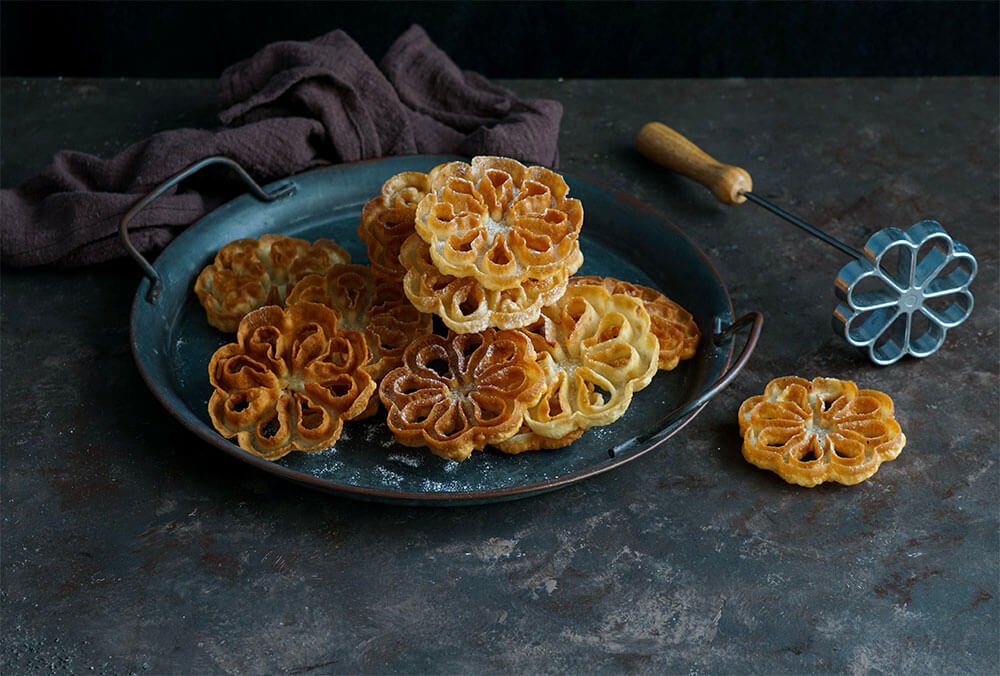
Among Norwegians, cookies like krumkake, rosettes, and sandbakkels were popular variations using butter or lard, white flour, and sugar, they could be fussy and difficult to make, requiring special equipment. Lefse, while beloved in my family, was a time-consuming affair. For large farming families like my grandparents’, special foods like lefse and holiday cookies were important, sometimes batch cooking made life a little easier when there was work to do.
Rømmegrøt and my mom’s favorite søtsuppe (or “sweet soup,” also known as frukt suppe, or “fruit soup”) were hearty and rich, and were much simpler to make in large batches than cookies or lefse. My mom always used her grandma Tilda’s recipe for søtsuppe, though she added her own variations. Tilda’s original recipe called for prunes, raisins, tapioca pearls, and cinnamon sticks sweetened with sugar – all imported delicacies which by the early 20th century were much more affordable than they had been in her grandparents’ time. Soaked overnight and then cooked slowly into a thick soup and served hot or cold with cream, søtsuppe is a unique delicacy that smells and tastes like Christmas to me. Mom’s variation was to add dried apricots for color and flavor, and cut the sugar in favor of orange juice.
With family roots in Kidder County, I also got to enjoy Germans from Russia delicacies growing up. Probably best known for knoephla soup (a favorite of mine), holidays for Germans from Russia mixed Christmas cookies like pfeffernusse, lebkuchen, and springerle with a unique favorite no Germans from Russia home would be without – kuchen. Likely a variation on German käsekuchen, North Dakota kuchen consists of a tender, crumbly, yeast-leavened crust filled with fruit dressed in a creamy baked custard. Prune is traditional (there’s those imported dried fruits again), but these days apple, pear, peach, rhubarb, and even apricot or blueberry are more popular. Rich with cream and eggs and dusted with cinnamon, there isn’t a kuchen flavor specific to Christmas, but all families have their favorites. Rhubarb is mine, but apple or prune say “Christmas” to me.
Germans from Russia have another delicacy that isn’t made at home, but is essential to Christmas: halva (sometimes spelled “halvah”). Traditionally made of sesame seeds and honey, it dates back to the ancient Middle East. “Halva” means “sweetmeat” in Turkish. In North Dakota, vanilla, chocolate, and marble flavors are most common.
It’s unclear when halva was introduced to North Dakota. Did Germans from Russia bring the popular treat with them from Ukraine? The first person to commercially produce it in the U.S. was a Ukrainian immigrant who founded the Joya company in 1907 in Brooklyn, NY. Or perhaps the droves of Syrian and Lebanese immigrants fleeing economic hardship and political unrest from the 1870s to the 1910s brought halva with them to the state? My Grandma Ruby remembers halva being sold in the country store she worked at in high school in the 1940s, and the earliest North Dakota newspaper references date to the 1930s. Regardless of how halva was introduced, it became an early 20th century staple in many North Dakota communities.
While keeping traditions kept the old country memories and culture alive, immigrant North Dakotans also adapted. Cherries and apples may have been traditional “käsekuchen” ingredients in Germany, but Germans from Russia pivoted to include prunes, peaches, and rhubarb in Ukraine, adaptations that were easy to replicate in North Dakota, which resembled both the Russian steppes and Ukrainian black dirt region. Norwegian rømmegrøt may have been made with soured cream back in the old country, but abundant fresh sweet cream made more sense to use in North Dakota. Today, some folks even make a variation of halva with sunflower seeds, instead of sesame seeds.
Keeping Christmas
Growing up in Fargo, I attended many Scandinavian holiday events, and ate my fair share of those fussy-to-make delicacies like krumkake, rosettes, and lefse made by dedicated home bakers. My other Norwegian grandmother, Eunice, made her famous tea ring every year, and often made krumkake, lefse, and crisp Norwegian flatbreads as well as pepparkokkar for her Swedish husband.
Other traditions were shared across cultures. Sunday school Christmas treats of paper bags filled with nuts, an apple or orange, and ribbon candy, were common in Germans from Russia and Scandinavian churches alike – a throwback to days when storebought candy was expensive and scarce, and fresh fruit a rare treat in deep winter. My mom made them for the Swedish Society’s annual Sankta Lucia event for years.
At home, my health-conscious mom wasn’t as keen on buttery, sugary sweets at the holidays, so the steamy scent of bubbling søtsuppe is my most common Scandinavian Christmas memory. It’s one I replicate at least once a year. And while rømmegrøt was a rare treat growing up, it was a favorite I learned to make on my own – bringing a taste of North Dakota east with me. Both are simple to make and don’t require special equipment.
Although many of us are increasingly far removed from our immigrant roots, food is one way we can keep our connections to the past alive. Whether you are 100% Scandinavian (like me) or 6% German from Russia or some other combination altogether, I hope this holiday season you’ll take some time to learn a recipe from your grandparents’ or great-grandparents’ generation and share the results and the story with family and friends. And maybe this is the year I’ll finally tackle krumkake or kuchen.
If you’d like to learn more about Scandinavian traditions in North Dakota, check out your local Sons of Norway (Fargo’s Kringen Lodge even has its own restaurant!) or other community groups like the Swedish Society of the Red River Valley, Red River Danes, Red River Finns, and others. To learn more about Germans from Russia, check out the Germans from Russia Heritage Collection at NDSU (which also sells cookbooks) or the Germans from Russia Heritage Society.