Ugly, Umami, Upcycled The Two Vanessas and the Building of Farmented Foods
Written By: Melinda Goodman
Photos: Ron Rouse
Every visit with an entrepreneur is a story about how they found their idea. For the two Vanessas, it started as a class project to solve a real-world problem. What they found was a problem hiding in plain sight.
But a class assignment doesn’t make a business. For Vanessa Williamson and Vanessa Hamilton, it became a roadmap and eventually, a leap of faith.
Practical & Profitable
Every conversation about food begins with profitability. If farmers lose yield or quality, they lose money. Less yield means less food. Less food means higher prices.
Sometimes those losses come down to something simple: produce that doesn’t sell.
Carrots that aren’t straight. Cabbage that’s too big or slightly off. A bumper crop with nowhere to go. Perfectly edible food left in the field. Not because it lacks nutrition or flavor, but because it doesn’t fit the system.
So the Vanessas asked: What if we could take what’s overlooked and turn it into something people want?
Fermentation became the answer.
From Side Hustle to Full Time
They sold their first products at the Bozeman Farmers Market in December 2017. Despite a growing fan base for spicy carrots, radish kimchi, and dill sauerkraut, they kept their day jobs. Their spare time was spent testing recipes, chopping vegetables, and packing jars.
“We didn’t pay ourselves for several years,” Vanessa says. “It was nights and weekends…just figuring it out.”
But they did figure it out and people kept coming back. Farmented grew from a couple farmers to nearly a dozen. It became shared success; for farmers, consumers, and the Vanessas.
Umami, With Purpose
Fermented foods have a way of sneaking into your fridge. They invite both curiosity and loyalty. Some come for the health benefits. Others for bold flavor.
That same pull of the space of unknown shaped Farmented. That connection, paired with growing awareness of food waste and gut health, placed Farmented at the center of a broader movement. But for Vanessa H., the pull was also personal. Growing up in Grand Forks with a father who farmed, agriculture found its way back into her life and so did North Dakota.
Growing Home
Today, Farmented stretches across Montana and North Dakota.
After returning to North Dakota in 2020, Vanessa H. connected with local farmers and saw the same challenges she experienced in Montana. Instead of stepping away, she found more ways to step in and expanded.
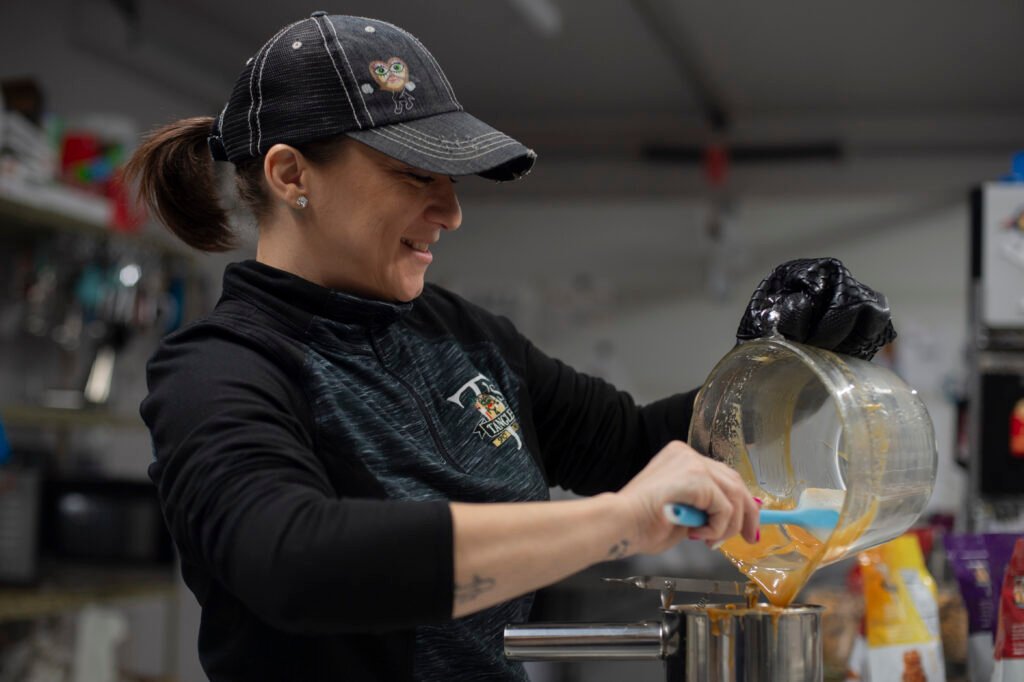
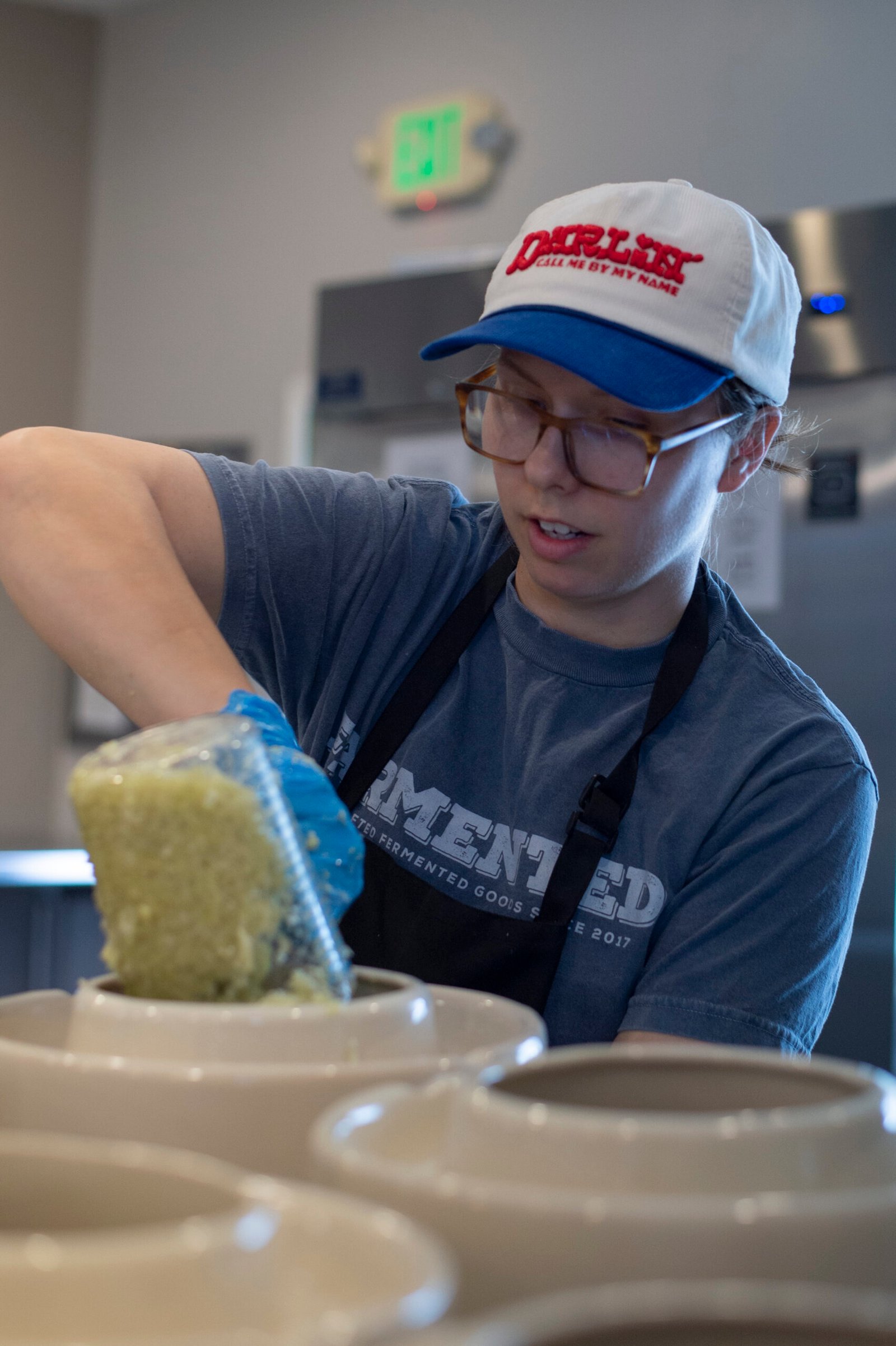
Now operating out of a shared kitchen in Fargo, she partners with producers like Dig It Produce to keep sourcing local. Her work is hands-on and includes prep, fermentation, packaging, shipping.
Because fermentation takes time, production is staggered. Small batches are always in motion, each at a different stage, balancing supply with craft.
Old World, New Moment
Fermentation is one of the oldest methods of preserving food but today, it feels new again. From kombucha to kimchi, gut health has entered everyday conversation. At Farmented, the goal is to make it approachable.
This isn’t your grandma’s sauerkraut. It’s bold and versatile; used like salsa on eggs, layered into grilled cheese, or added to everyday meals for a punch of flavor.
But it starts with taste. “If it doesn’t taste good, people won’t eat it,” Vanessa says.
More Than a Product
Farmented isn’t just about what’s in the jar. It’s about the choices and the system behind it.
When I ask Vanessa what success looks like, she talks about keeping dollars local, supporting farmers, and building stronger communities.
“Everyone should be able to access healthy, fresh food,” she says. “In an affordable way.”
Today, Farmented products can be found across North Dakota in retailers like Hornbacher’s, Hugos, local health stores, farmers markets, and online.
Core products like Dill Sauerkraut, Radish Kimchi, Spicy Carrots, and Caraway Sauerkraut lead the lineup, with occasional seasonal releases. Time is precious and growth is intentional.
“It’s not that new products aren’t on our radar,” she says. “We just need to be really excited about them so the quality remains.”
Closing the Loop
As we wrapped up, I asked Vanessa how she defines Farmented; as a food company, a sustainability company, or both.
“It’s both,” she says. “The biggest problem with our food system is waste. We have an opportunity to close that loop.”
It’s a simple idea with a powerful outcome. Food connects everything. Farmers to consumers. Past to present. At Farmented, what was once overlooked becomes something worth seeking out and worth coming back for.