Waste Not, Want More: Prairie Compost Turns Waste Into Something Worth Keeping
Written By: Darylanna Durkee
Photos: Ron Rouse
Most of us don’t think twice about it. A plate is cleared, scraps are swept into the trash, the bag is tied and taken out. But “out” isn’t really away. It shouldn’t even be a detour. It should be a new path.
Nearly 60% of what we throw out is organic matter like food waste that ends up in a landfill. There, those remnants are forgotten — sealed in a tomb, absent of oxygen and compacted into dense layers that can take decades to break down, losing the value they once had.
In North Dakota, where land is abundant and disposal costs stay low, landfills remain out of sight and out of mind. Therefore, many of us don’t think twice about what we throw away.
But under the right conditions, organic material can be transformed into something useful again. Food waste can become rich, living soil.
A Business Built on Scraps and Sweat Equity
Bridger Scraper and Hayden Thompson were college roommates and entrepreneurs who had already tried their hand at small business. They discovered they liked working together and being in business for themselves while providing a service to their community. What they hadn’t found was a project that made a meaningful impact.
As they explored ideas, Bridger, an environmental science graduate, posed a simple question: What about food waste? From his early days in a high school environmental club to studying conservation biology, he understood both the environmental impact of waste and the economic loss of what we throw away.
In 2023 that answer became Prairie Compost, a food waste recycling business offering a closed-loop system for collection, processing, and compost production. “North Dakota is behind when it comes to composting,” Bridger says. “But that also means there’s opportunity.”
Making Composting Make Sense
With that opportunity came misconceptions. In nature, the process is seamless: leaves fall, scraps settle, and microbes and fungi go to work. Nutrients cycle back into the soil.
But households aren’t nature. People have practical questions: Where do I put this? Will it smell? How often do I get rid of it?
That’s where Prairie Compost comes in.
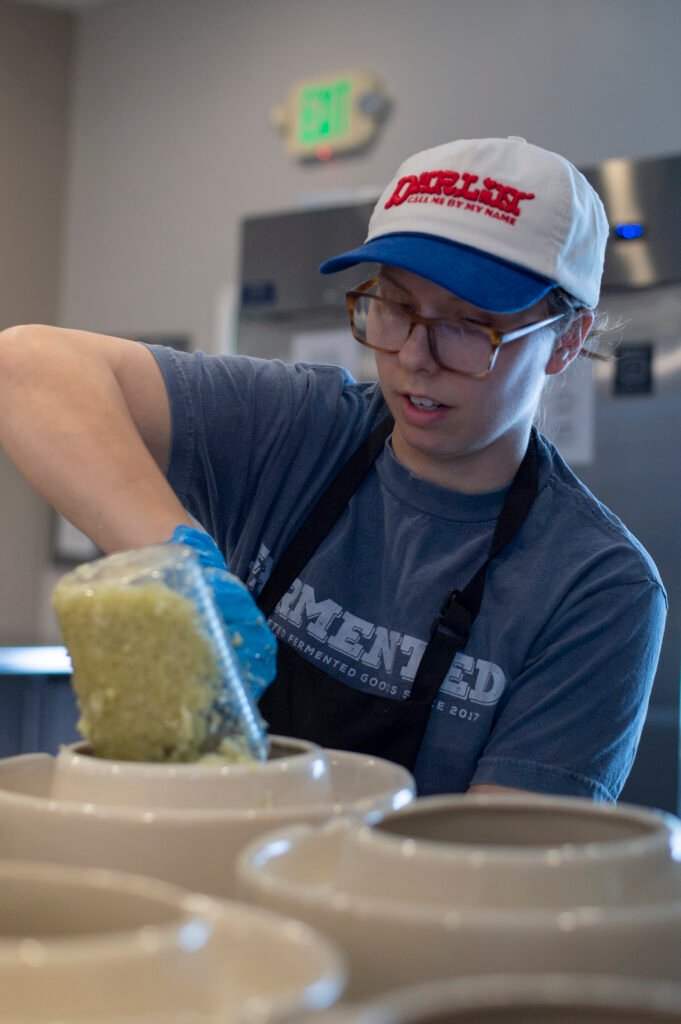
Customers sign up for a subscription service and receive a bucket with a biodegradable liner for food scraps. Everything from vegetable peels and eggshells to uneaten leftovers goes in the bucket instead of the garbage. Prairie Compost handles the rest.
Depending on the plan, customers choose drop-off or pickup. Full buckets are exchanged for clean ones, and the material is processed into finished compost.
“Our goal is to remove the friction,” Hayden says. “It needs to be simple.”
It’s a model that’s working, growing from early adopters into a steady customer base of households and local businesses. In just two years, Prairie Compost has diverted 61,000 pounds of food waste while building and refining their system.
From Waste to Resource
What happens next is less visible, but just as important.
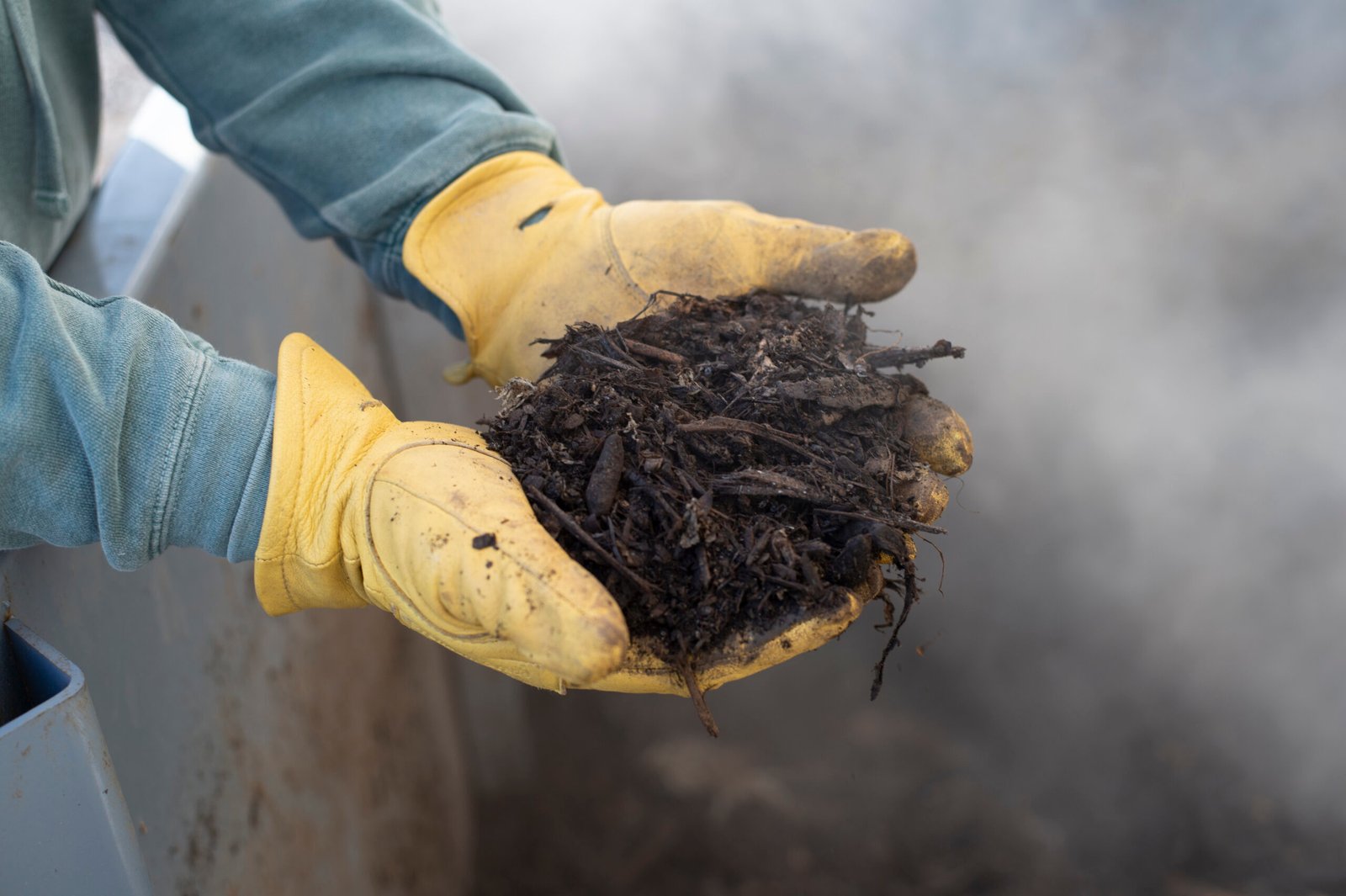
Composting is both art and science — balancing carbon and nitrogen, managing moisture and airflow, and creating conditions where microbes can do their work. Over time, the transformation is obvious as waste turns to dark, earthy organic material ready to return to the soil.
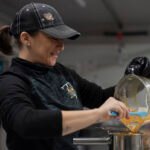
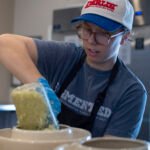
Through a process that includes mechanical digesters, wood chips, sawdust, earthworms, and curing piles, food waste is transformed in just a few weeks. Instead of ending in a landfill, it is returned to customers, used in gardens, donated locally, and reintegrated into the region’s soil.
A Small Shift, A Fuller Table
The takeaway isn’t complicated. You don’t have to overhaul your life, you just must look at one habit differently.
Food waste is something every household produces. It’s consistent, predictable, and largely ignored. But that’s changing. Whether it’s signing up for a compost service, starting a backyard pile, or simply paying attention to what’s being thrown away, small shifts can lead to big change.
“It’s not about doing everything,” Hayden says. “It’s about doing something. Food waste is not trash. It’s a resource.”
Prairie Compost is already planning for growth, with new equipment that will expand capacity to more than 500,000 pounds of food waste per year starting this spring. They’re currently signing up new residential and commercial customers.
But the bigger goal is simpler: build something that leaves a better world for the next generation.
Because when food is thrown away, it’s not just scraps that are lost; it’s the energy, water, and care that went into producing it.
Honoring food doesn’t end when the plate is cleared. Sometimes, it begins there.